
Keteki blooms anchor Bohag in this Nalbari village, spur conservation call
Visitors from across Assam arrive annually, turning this quiet village into a seasonal hub during peak keteki blooming period
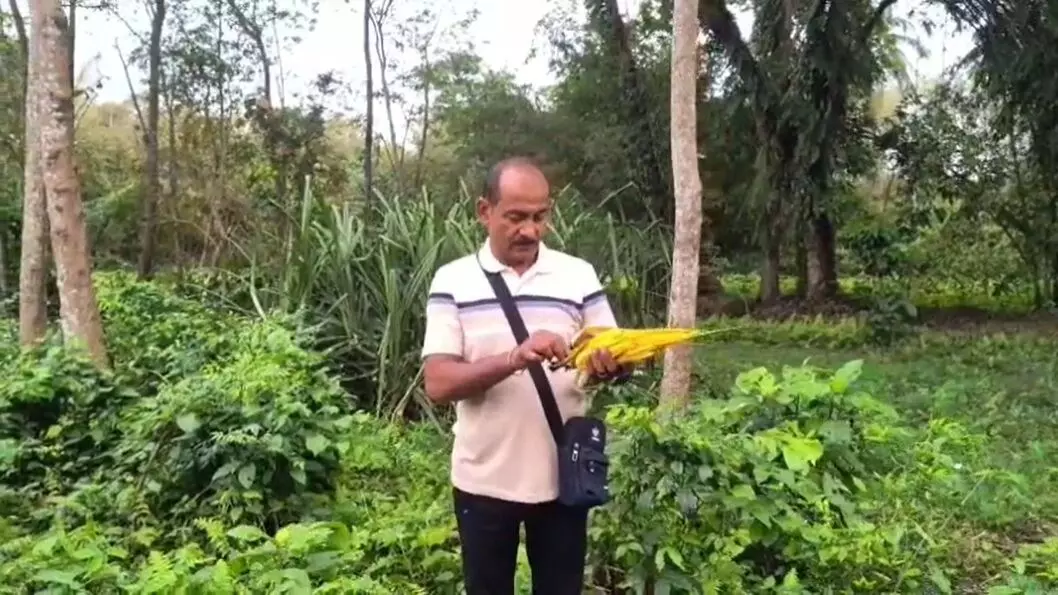
Local resident and activist Uddhab Chandra Thakuriya with a bunch of keteki flowers. (AT Photo)
Nalbari, Apr 13: As Bohag ushers in spring across Assam with fresh leaves and mild sunshine, a quiet village in Nalbari is drawing attention for a tradition rooted in fragrance, memory and community.
Nakerbari village in Kaithalkuchi, situated along the banks of the Morapagladia River, has for decades been known for the lingering aroma of keteki (fragrant screw pine) flowers that envelops the area during this season.
From the Assamese month of Chot to mid-Jeth, the premises of the Gopal Temple come alive with blooming keteki, once found in abundance across the region.
Residents recall that the area surrounding the temple was once densely covered with keteki trees, their distinctive scent shaping the identity of the village. While the number of trees has reportedly declined over the years, their cultural and emotional significance remains deeply intact.
Uddhab Chandra Thakuriya, a local resident and social, cultural and environmental activist, said the Gopal Temple premises have long been synonymous with keteki blooms. He noted that villagers have approached the Nalbari district administration, seeking measures to protect the remaining trees.
“This is our good fortune. As far as I know, the keteki trees near Gopal Mandir are among the most in lower Assam. There are some at Dubi Devalay as well, where they have been preserved across a large area with barricades. Ours here are larger, and for us villagers, they are very dear,” he said.
During Bohag, keteki flowers form an integral part of local customs. Guests attending community events are traditionally welcomed with the blooms, while a flower is offered daily at the Gopal Temple during evening prayers.
The practice continues to attract visitors from across Assam, many of whom travel to Nakerbari specifically to witness the flowering trees within the temple premises.
“When the keteki flowers bloom, their fragrance spreads across the entire region,” Thakuriya said, adding that the scent can be experienced from nearly a kilometre away. “If you keep a keteki flower at home, its aroma can last for at least a week," he added.
For over a century, the village’s youth organisation has been actively involved in preserving the keteki trees. However, residents now emphasise the urgent need for stronger conservation measures to safeguard what remains.
Thakuriya said there is a need to conserve the flower in keeping with tradition. He added that he had earlier requested the administration, but the matter was delayed due to administrative developments.
“Recently, I met the BDO and even offered him a keteki flower, urging him to take steps towards its conservation. While the issue falls under the village’s committee jurisdiction, a small financial push from the government would go a long way in preserving it,” he added.
As Bohag festivities unfold, Nakerbari stands as a reminder of how tradition and nature continue to shape cultural identity, even as a fading floral legacy calls for renewed protection.